Professional tracks

Professional tracks

The Program Building Engineering for Sustainability is organized into four tracks that correspond to four professional profiles, those for which our graduates are most appreciated. The choice of language of teaching, with one track in Italian and three in English, also was determined by employment opportunities. The track taught in Italian, BES-S, refer to the predominantly national demand for professionals able to ensure the structural safety and resilience of new and existing buildings. The three tracks taught in English, BES-D, BES-F and BES-M, on the other hand, train professionals in areas where most of the businesses operate on an international scale, both abroad and in Italy.

The goal is to ensure both our Italian and international graduates have the best employment opportunities, both for those who decide to stay and work in Italy and for those who want to gain experience abroad.
BES-S Strutture Tecnologie Materiali

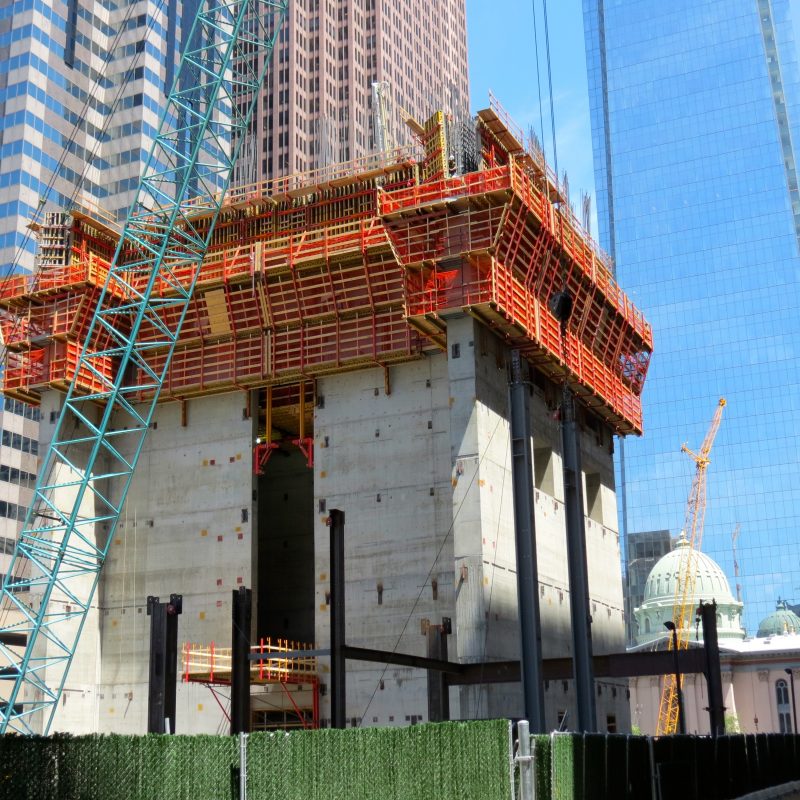
The BES-S track aims to train engineers with the skills needed to ensure the safety, sustainability and resilience of both new, even complex, and existing buildings. Globally, the construction industry is one of the main sectors responsible for consuming the planet's resources, in terms of energy, water and raw materials. The production of construction materials, such as concrete, steel and bricks, generates significant greenhouse gas emissions. The Building Engineer for Sustainability, with a specialization in Materials Technology and Structures, is able to apply advanced computational methods and tools to optimize the structural design of buildings; adopt new technologies, composite and environmentally friendly materials to improve the performance of structures, reduce construction time and costs, and control their environmental impact; and manage renovation and seismic retrofitting in order to promote the sustainable reuse of the existing building stock.

BES-D Digital Construction

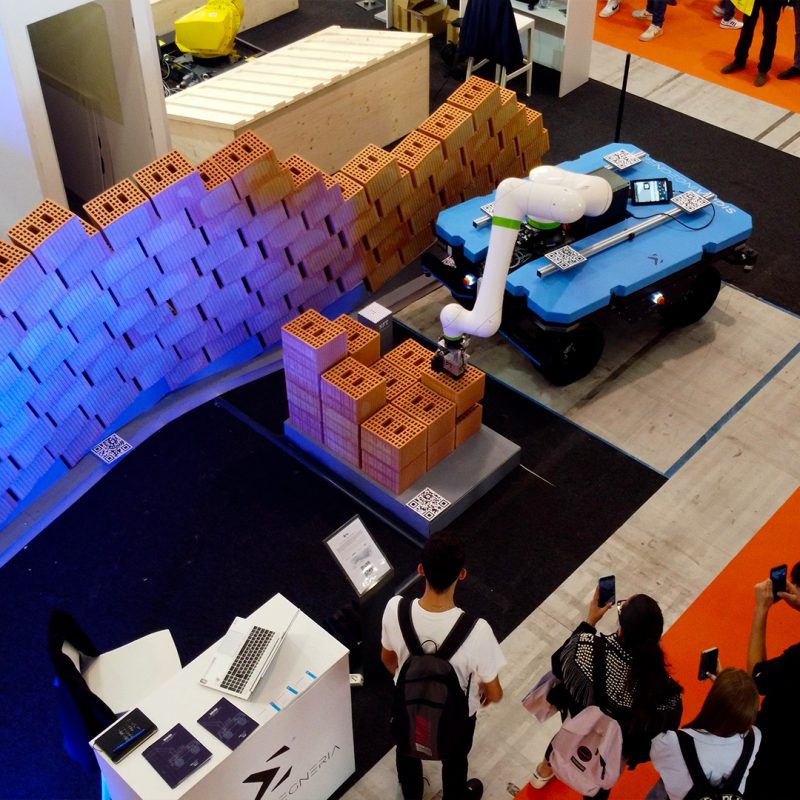
The construction industry is undergoing a major transformation: its complete digitalization has brought about a different and revolutionary way of designing, constructing and managing buildings and the built environment in general.

The BES-D track aspires to train the experts needed to support this turnaround: an innovation that is increasingly urgent and a challenge for which the sector is now ready: globally, as improving the efficiency and effectiveness of its processes is key to pursuing the global sustainability goals, and locally, to reshape supply chain behaviors, increase productivity levels, and enable new qualitative goals in terms of safety as well as sustainability.

BES-F Innovative Envelope and Facade

The envelope constitutes one of the most integral and expressive elements in the design of any building: it not only determines its aesthetic appearance, but also serves as its main protection. Integrated into high-performance buildings, it also plays a crucial role in energy efficiency and overall occupant comfort by controlling the exchange of heat, light and air, and contributes significantly to zero-carbon targets. In this context, the BES-F track, taught in English, provides an opportunity to explore innovative, integrated and multidisciplinary design approaches for the design and optimization of building envelopes, through advanced modeling tools, computational design methods and digital fabrication. Basic and advanced design strategies are presented with a detailed focus on mechanical, thermal, and safety performance. Students learn to design and manage key technical interfaces between the building envelope and other major parts of the building, such as the structure and systems, and explore the design of dynamic and responsive facades, which have the potential to lead building technologies toward more efficient use of resources while adapting to a changing environment.

BES-M Performance Modeling and Design

Architecture and Construction Industry face a growing demand in controlling the performances of the buildings they realize. The requirements for reliably health, safe and comfortable assets have grown, but, today, they come with the urgent issues for their total decarbonization and the uncertainties related to climate change and its possible consequences. Buildings are the single largest energy consumer in Europe and third worldwide. In order to contrast climate change, the European Union aims to achieve a fully decarbonized building stock by 2050. For this reason, BES-M focuses on the assessment of the energy performance of buildings and their related Greenhouse gases (GHG) emissions. Students will acquire skills in the study and prediction of the behavior of the building systems, their interaction with users and the environment; they will be able to accurately simulate the energy and environmental impacts of buildings, individually or at the district scale, to support decision-making processes at different stages of design, to ensure high performance in both new construction and retrofit of existing buildings. 

POLIMI AMBASSADOR

Students enrolled in Building Engineering for Sustainability have the opportunity to select a high-level training program that allows them to obtain the additional title of expert in Green Technologies. Students who join the program will be able to select a number of courses - compulsory and elective - equal to a minimum of 30 ECTS (including 10 ECTS in supernumerary for a total of 130 ECTS) and obtain at the end the title of POLIMI AMBASSADOR in GREEN TECHNOLOGIES.

More information is available at the link: https://www.polimi.it/en/programmes/high-level-training-courses/green-technologies-smart-infrastructures-e-inclusivity-design

SUPPLEMENTARY PROFESSIONAL QUALIFICATIONS

By customizing the study plan with elective courses, the BES Master’s degree offers students the opportunity to gain recognition, during their academic career, for the training modules required to obtain additional professional certifications. To ensure full compliance with national regulatory requirements, these courses are delivered in Italian.

Coordinatore della Sicurezza nei Cantieri

Ottenere questa qualifica significa entrare nel mercato del lavoro con una competenza tecnica distintiva, fondamentale per ruoli di leadership nel settore delle costruzioni.

  • Come: Frequentando gli esami di Tecnica e Sicurezza dei Cantieri (1° anno) e Coordinamento della Sicurezza dei Cantieri (2° anno) per un totale di 15 CFU. Al superamento degli esami (secondo criteri di merito), lo studente riceverà l'Attestato di Coordinatore della Sicurezza per la Progettazione e l'Esecuzione.
  • Sbocchi professionali: Questa certificazione arricchisce il profilo del futuro Ingegnere in ruoli chiave quali: Project Manager e Direttore dei Lavori, Direttore Tecnico di Cantiere, Responsabile Unico del Progetto (RUP), Coordinatore della Sicurezza per la Progettazione e l’Esecuzione, Responsabile del Servizio di Prevenzione e Protezione (RSPP)

Professionista Antincendio

Grazie all’accordo con il Corpo Nazionale dei Vigili del Fuoco e all’Ordine Ingegneri di Milano, lo studente potrà acquisire i requisiti per l'iscrizione agli elenchi ministeriali dei professionisti antincendio.

  • Come: Inserendo nel piano di studi del 2° anno gli insegnamenti di Ingegneria della sicurezza antincendio (1° sem.) e Ingegneria della sicurezza antincendio avanzata e FSE (2° sem.) per complessivi 12 CFU. Il superamento degli esami con i criteri di merito indicati nel programma degli insegnamenti equivale alla frequenza del Corso base di specializzazione in prevenzione incendi da 120 ore organizzato dall’Ordine degli Ingegneri di Milano.
  • Sbocchi professionali: Una volta iscritto all’Ordine Ingegneri di Milano, il neolaureato potrà accedere direttamente all’esame per l'iscrizione agli elenchi del Ministero dell'Interno (D.M. 5 agosto 2011 e art. 16 del D.Lgs. 139/2006), ottenendo una competenza essenziale e strategica sempre più richiesta nel mondo del lavoro e un vantaggio reale e competitivo nella sua crescita professionale.